





Polyanionic Cellulose (PAC) in Water-Based Drilling Fluids
2026-09-17 07:05:47
Filtration loss is one of those mud properties nobody talks about until something goes wrong. Then it all comes at once: thick filter cake, tight spots on trips, stuck pipe, and a formation that has been quietly swelling behind the wall for two days. Carboxymethylated cellulose derivatives have been the standard answer for decades, and one particular high-purity variant — polyanionic cellulose, universally shortened to PAC — does the job better than the older technical grades it grew out of. Knowing why it works makes it much easier to specify the right grade, and much harder to be quietly sold the wrong one.
What Makes PAC Different From Ordinary Cellulose Gum
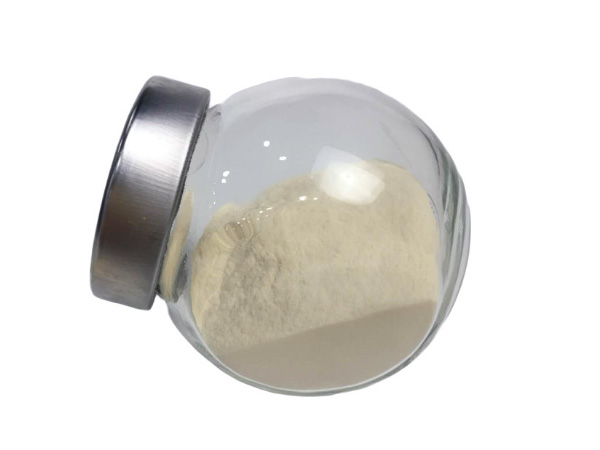
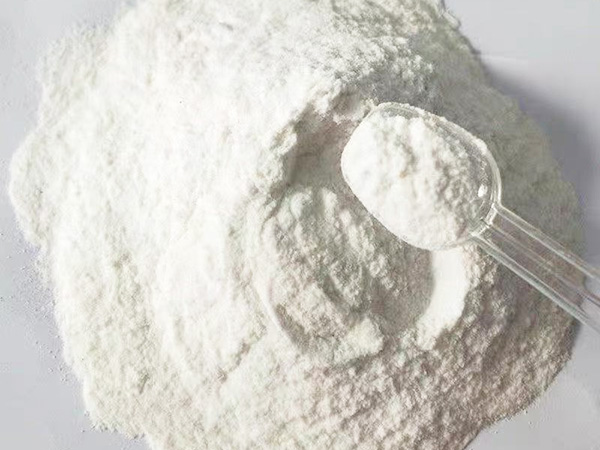
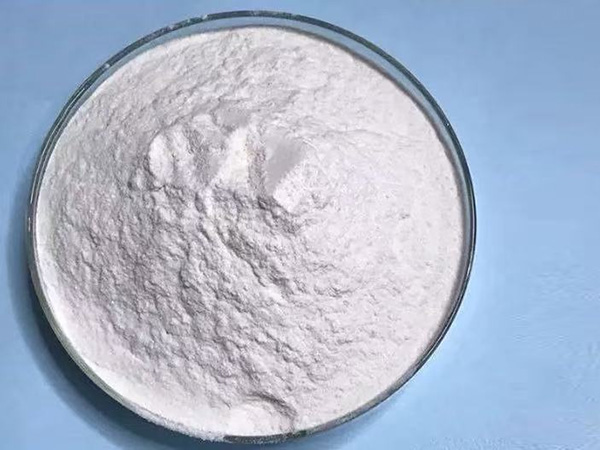
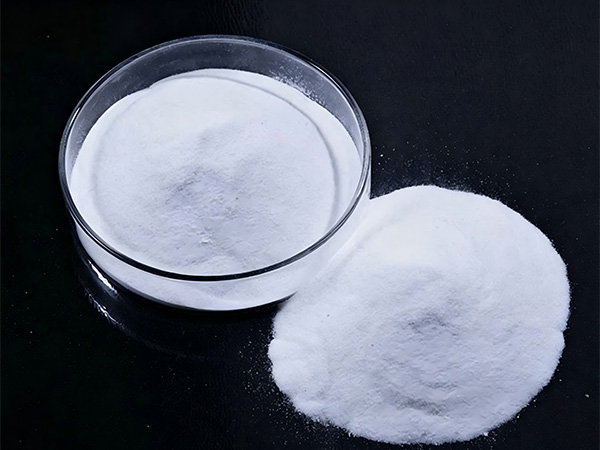
BothPAC and carboxymethyl cellulose start from the same raw material and the same reaction — alkali treatment followed by etherification, which grafts carboxymethyl groups onto the cellulose chain. The distinction is degree of substitution, meaning how many of those groups are attached, and how evenly they sit along the chain. PAC is made to a higher, more uniform substitution level, and that uniformity is not a marketing point. Regular spacing keeps the polymer extended rather than coiled in brine, which is exactly the behaviour needed when the fluid is loaded with salt. On the surface both products look alike: white to slightly yellow, free-flowing, odourless powder that dissolves in cold or hot water into a clear viscous solution.
The Main Job: Getting Filtration Loss Down
When mud contacts a permeable formation, liquid invades and solids are left behind as a wall cake. Thick cake narrows the hole, and the filtrate entering the formation does its own damage — clays hydrate and swell, permeability falls, and in the worst cases the wellbore begins to fail. PAC reduces this because the extended anionic chains adsorb onto clay edges and flocculate fine particles into a tight, low-permeability cake that seals itself off quickly. Standard Chinese specification GB/T 5005-2010 sets the requirement precisely: low-viscosity PAC must hold filtration to 20 mL or less in salt-water suspension, and high-viscosity PAC to 16 mL or less. Those numbers, not the viscosity claim, are what tells you whether the product will perform downhole.
LV and HV — and Choosing Between Them
Suppliers split PAC into low-viscosity and high-viscosity types, and the choice is less about quality than about which property you actually need. LV grades control filtration without building much viscosity, which matters in dense weighted systems where adding thickness means fighting unnecessary pressure losses. HV grades do both: they cut filtration and carry cuttings at the same time, useful in unweighted hole sections where annular clearance is generous and cleaning is the constraint. The GB/T specification reflects this split — PAC-LV requires a minimum dial reading of 17 in deionized water while PAC-HV requires 30. Plenty of mud programs run both, adding HV in the upper hole and LV once weight material goes in.
Seawater, Salt Beds and Other Hostile Chemistry
This is where PAC justifies its cost against cheaper alternatives. Because substitution is uniform, the chains resist the charge screening that collapses ordinary carboxymethyl cellulose in hard water or brine. Salt tolerance means a seawater mud, a saturated-brine completion fluid, or a system contaminated by anhydrite still behaves. It also makes PAC the standard choice for offshore work where seawater is the base fluid and there is no alternative — rather than attempting to pre-hydrate bentonite at the dock, which costs time and pit space. The mistake we see most often is operators buying LV when HV is what the program needs, then compensating with extra material to reach target viscosity.
Where Temperature Draws the Line
PAC handles heat well, normally quoted as stable to around 150°C, which covers all conventional wells and a good part of the unconventional ones. Beyond that, thermal degradation of the ether linkages begins thinning the polymer faster than it can be replaced, and oxidative attack accelerates the process considerably. Standard practice for hot holes is a combination: keep pH alkaline, add oxygen scavengers, and accept that top-up rates climb as bottomhole temperature rises. Anyone promising unlimited thermal stability should be asked for data measured in your actual brine, not in deionized water.
Mixing It Without Creating Problems
PAC hydrates readily, but it still needs decent shear to develop properly, and it should go in slowly through a hopper rather than being tipped in as a slug. Adding it to a system already loaded with calcium is slower than adding it early, so sequencing matters. Because it is a cellulose ether it will also thicken biocide-free systems into something noxious if a mud sits warm and idle — another reason to keep treatment current rather than reactive.
Checking What You Are Actually Buying
PAC sits under API Specification 13A, identical to ISO 13500, and under GB/T 5005-2010, which added PAC-LV and PAC-HV chapters when those products were standardised. Ask the manufacturer whether the grade is tested against API, GB/T, or the older OCMA specification, and request filtration results in the brine you actually run. Consistency between lots matters more than headline numbers; a supplier whose filtration value swings by 30% between deliveries will cost more in additives than the price difference ever saved.
A Closing Word on Sourcing
PAC does three jobs at once — filtration control, shale inhibition and, from the HV grades, cuttings transport — which is why it stays in nearly every water-based program despite costing several times more than commodity thickeners. Buy against a standard, test in real brine, and lock filtration performance into the specification rather than trusting viscosity alone. A manufacturer who can hold that number is worth keeping.
References
GB/T 5005-2010. "Specifications of Drilling Fluid Materials" (MOD ISO 13500:2008). Sections 13 and 14: PAC-LV and PAC-HV. Standardization Administration of the People's Republic of China.
API Specification 13A, 19th Edition (2019). "Specification for Drilling Fluid Materials." American Petroleum Institute. Identical national adoption of ISO 13500.
van Oort, E. (2003). "On the physical and chemical stability of shales." Journal of Petroleum Science and Engineering, 38(3-4), 213-235.