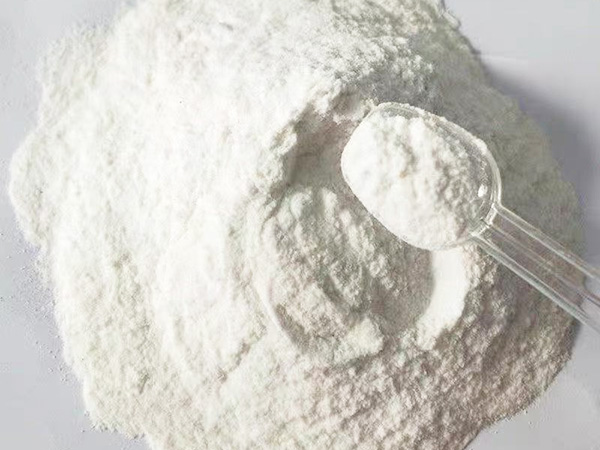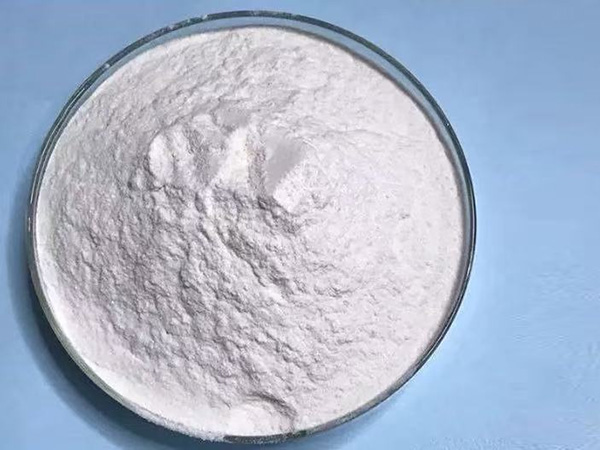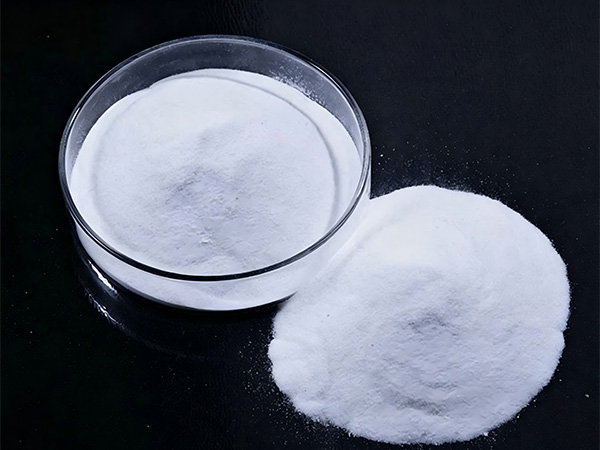






Anionic Polyacrylamide (APAM) in Wastewater Treatment
2026-07-15 04:18:36
Industrial wastewater is rarely straightforward. Depending on the source — mining runoff, steel mill effluent, coal washing discharge, or municipal sludge — the suspended solids, colloidal particles, and dissolved contaminants present can vary enormously in character, concentration, and charge behavior. This complexity is precisely why anionic polyacrylamide has become one of the most widely used flocculants in the water treatment industry. It is a versatile tool that, when applied correctly, can dramatically accelerate solid-liquid separation and produce clearer effluent at lower operational cost.

How Anionic Polyacrylamide Works
APAM is a linear polymer made up of acrylamide monomers copolymerized with negatively charged monomers, typically sodium acrylate. The resulting molecular chain carries carboxylate groups along its length, giving it a net negative charge. When added to a wastewater stream, these negatively charged groups interact with positively charged particles and contaminants through a combination of charge neutralization and particle bridging mechanisms.
In simple terms, APAM acts like a molecular bridge: one part of the polymer chain adsorbs onto one suspended particle, while another part of the same chain reaches out to adsorb onto a neighboring particle. As this bridging continues, small particles clump together into larger, heavier flocs that settle quickly under gravity or can be filtered more easily. The process is fast — in most treatment systems, visible flocs form within seconds of APAM addition.
Key Properties and Specifications
Not all APAM performs the same way, and selecting the right product requires understanding a few critical parameters. Molecular weight is probably the most important variable. Higher molecular weight APAM produces larger, stronger flocs and works effectively at lower concentrations, but it dissolves more slowly and can be harder to blend into a treatment system. Medium molecular weight grades offer a practical balance for many industrial applications.
Charge density — expressed as the percentage of anionic monomers in the polymer chain — is the second key specification. Higher charge density means stronger interaction with positively charged particles, but it also means the polymer chain is more stiff and may not bridge as effectively between particles with moderate charge. Matching charge density to the ionic character of the wastewater is essential for optimal performance.
Applications Across Major Industrial Sectors
In mining and mineral processing, APAM is used extensively for tailings thickening and water recovery. The ability to rapidly aggregate fine mineral particles means faster settling in tailings ponds and higher water recycle rates — both of which translate to lower fresh water consumption and reduced environmental footprint.
Coal washing plants generate large volumes of fine slurry that is difficult to dewater. APAM treatment enables the coal fines to aggregate into settleable particles, allowing clearer supernatant to be recycled back into the process. The same principle applies to ore processing and sand and gravel washing operations.
In municipal water treatment, APAM is often used as a coagulant aid following the addition of inorganic coagulants such as aluminum sulfate or ferric chloride. The inorganic coagulant does the initial charge neutralization, and APAM bridges the resulting microflocs into larger aggregates that settle faster in clarifiers. This two-stage approach often achieves better turbidity removal at lower total chemical cost than either chemical alone.
Dosage and Dissolution Best Practices
Getting the dosage right is important. Too little APAM and the flocculation is incomplete; too much and the excess polymer can actually stabilize the suspension — a phenomenon called re-stabilization — making the separation worse rather than better. Typical dosages in industrial wastewater treatment range from 0.5 to 5 parts per million, though some high-solids applications may require higher rates.
Dissolution matters just as much as dosage. APAM should be added to water through a proper dosing system — generally through a stirred mixing tank with a dosing pump — rather than dumped directly into the treatment basin. Undissolved polymer gel lumps not only waste product but can also create operational problems in downstream filtration or pumping equipment. A typical dissolution time of 30 to 60 minutes in a dilute solution is recommended before the product is fed into the main treatment flow.
Sourcing APAM from a Trusted Manufacturer
The water treatment chemicals market includes both large multinational suppliers and smaller specialized manufacturers. For buyers looking to source APAM for ongoing treatment operations, working with a manufacturer that offers consistent product quality and technical support can make a meaningful difference in treatment performance and cost per cubic meter of water processed.
A reputable APAM factory will provide technical data sheets, safety data sheets, and formulation guidance specific to the intended application. Many manufacturers also offer trial quantities and pilot testing support to help customers optimize their polymer selection before committing to full-scale purchase.
Final Thoughts
Anionic polyacrylamide is a genuinely powerful tool in the wastewater treatment arsenal. Its ability to aggregate fine suspended particles, work effectively at low concentrations, and function across a wide range of pH and temperature conditions makes it suitable for an enormous range of industrial applications. Getting the most out of APAM requires attention to product selection, dissolution practice, and dosage optimization — but when these factors are managed well, the results speak for themselves in cleaner water and lower operational costs.
References
Crittenden, J.C., Trussell, R.R., Hand, D.W., Howe, K.J. & Tchobanoglous, G. (2012). MWH's Water Treatment: Principles and Design (3rd ed.). John Wiley & Sons.
Bolto, B. & Gregory, J. (2007). "Polyelectrolytes in Water Treatment." Water Research, 41(11), 2301-2324.
Besra, L., Sengupta, D.K., Roy, S.K. & Ay, P. (2002). "Flocculation and Dewatering of Kaolin Suspensions in the Presence of Polyacrylamide and Surfactants." International Journal of Mineral Processing, 66(1-4), 203-232.