





How to choose NPAM for wastewater treatment?
2026-04-14 11:05:11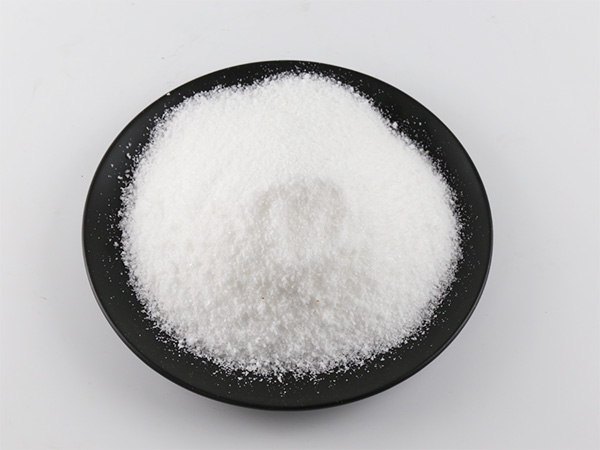
Selection of Nonionic Polyacrylamide(NPAM)for wastewater treatment mainly depends on water quality characteristics,suspended particle properties,treatment equipment,and expected treatment effect.Key selection indicators are molecular weight,particle size,purity,and dissolution performance.
1.Select by Molecular Weight
Medium molecular weight(3–6 million):
Suitable for low-turbidity water,general industrial wastewater,and sludge thickening.
High molecular weight(8–12 million):
Most commonly used for mining,sand washing,coal washing,tailings wastewater with high suspended solids;provides stronger bridging and faster sedimentation.
Ultra-high molecular weight(>12 million):
Used for fine colloidal wastewater,difficult sludge dewatering,and high-salinity oilfield wastewater.
2.Select by Wastewater pH and Composition
Acidic wastewater(pH<7):
NPAM is preferred over anionic PAM;choose high molecular weight NPAM.
High-salinity/high-hardness wastewater:
Select NPAM with good salt resistance(standard high-molecular grade is usually suitable).
Inorganic suspended solids(silt,ore,sand):
High molecular weight NPAM is optimal.
Organic-rich wastewater:
NPAM is less effective;generally use cationic PAM instead.
3.Select by Treatment Equipment
Sedimentation tanks/clarifiers:
Focus on floc size and settling speed→choose high molecular weight NPAM.
Belt filter press/chamber filter press:
Need dense,shear-resistant flocs→medium–high molecular weight NPAM.
Centrifuge dewatering:
Higher shear resistance required→relatively higher molecular weight NPAM.
4.Select by Particle Size and Dissolution Speed
Fine powder:fast dissolution,easy to agglomerate;suitable for small-scale dosing.
Granular/large particles:slow to dissolve but less agglomeration;suitable for automatic dosing systems.
5.Select by Purity and Impurity Content
Choose products with low residual monomer,low moisture,high solid content(≥88–90%).
Impurities reduce flocculation efficiency and increase dosage.
6.Final Confirmation:Beaker Settling Test
The most reliable method:
Take wastewater sample.
Add different molecular weight NPAM solutions in sequence.
Observe floc formation speed,floc compactness,supernatant clarity.
Select the type with best effect at lowest dosage.
References
GB/T 7714
Yang W,Chen J.Selection Criteria of Polyacrylamide Types for Different Industrial Wastewaters[J].Industrial Water Treatment,2020,40(2):14–18.
MLA
Yang,Wei,and Jian Chen.“Selection Criteria of Polyacrylamide Types for Different Industrial Wastewaters.”Industrial Water Treatment,vol.40,no.2,2020,pp.14–18.
APA
Yang,W.,&Chen,J.(2020).Selection criteria of polyacrylamide types for different industrial wastewaters.Industrial Water Treatment,40(2),14–18.